
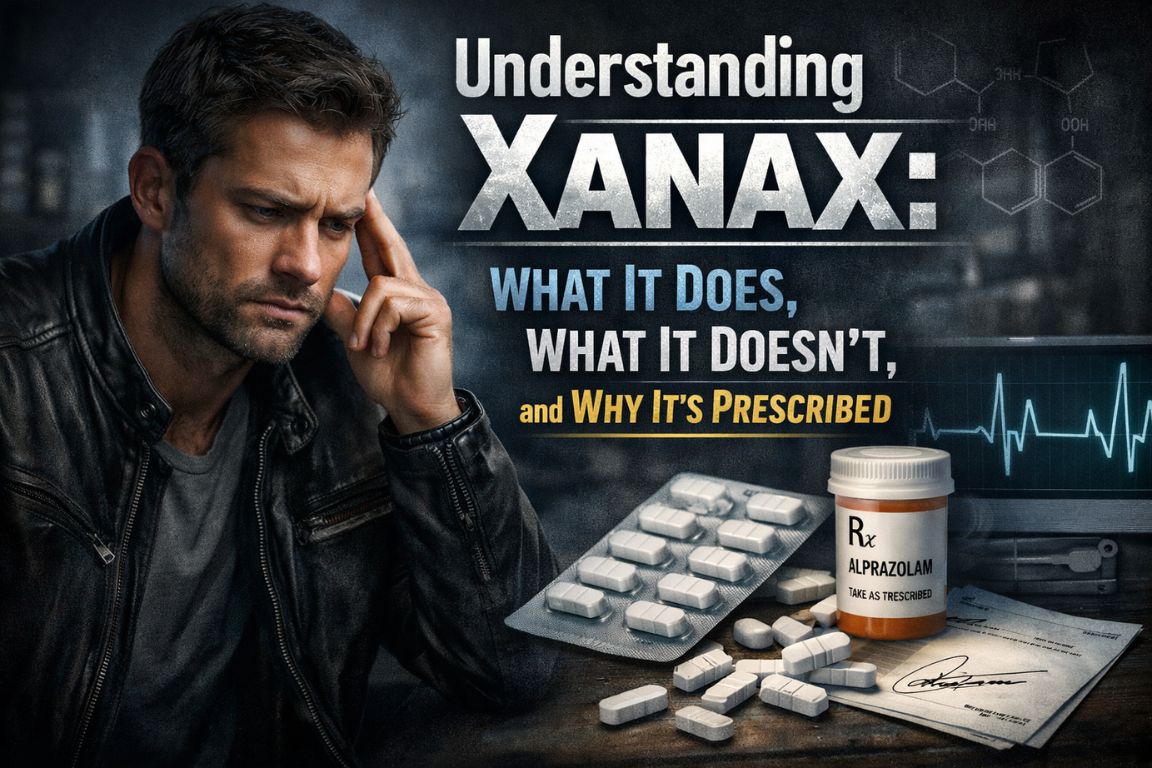
Xanax is a well-known prescription medication, but it’s often misunderstood. While it’s commonly associated with anxiety relief, understanding what Xanax actually does—and what it doesn’t do—is key to responsible use.
What Is Xanax?
Xanax (alprazolam) is a prescription medication in the benzodiazepine class. It’s most often prescribed to help manage anxiety and panic disorders, particularly when symptoms are intense or sudden.
What Xanax Does
Xanax works by enhancing the activity of GABA, a neurotransmitter that helps calm overactive brain signals. This can result in:
- Reduced feelings of anxiety
- A calming effect on the nervous system
- Short-term relief during acute stress or panic
Because it acts quickly, Xanax is often used when immediate symptom control is needed.
What Xanax Does Not Do
Xanax is not a cure for anxiety or underlying mental health conditions. It does not:
- Resolve the root cause of anxiety
- Replace therapy or long-term treatment
- Provide permanent symptom relief
For this reason, it’s typically prescribed as part of a broader care plan rather than a standalone solution.
Why Xanax Is Prescribed Carefully
Healthcare providers usually recommend Xanax for short-term or occasional use. Long-term use can increase the risk of dependence, so careful dosing and medical supervision are essential.
The Bottom Line
Xanax can be an effective option for managing acute anxiety when used responsibly and under medical guidance. Understanding its role—and its limits—helps ensure it’s used safely and appropriately.
Canada’s #1 Rx Online Shop
🛒 Buy Now
💸 20% off the entire store — no minimum
Promo Code: BLOG20